
On 11 December 2025, we gathered for The Rhine as Liquid Archive: Towards New Mythologies with Slow AI. The format of the session was developed in the style of a ‘material playground’ that invites participants to develop new modes of engagement with and explore the affordances of AI technology without the need for efficient processes or to reach particular outcomes.
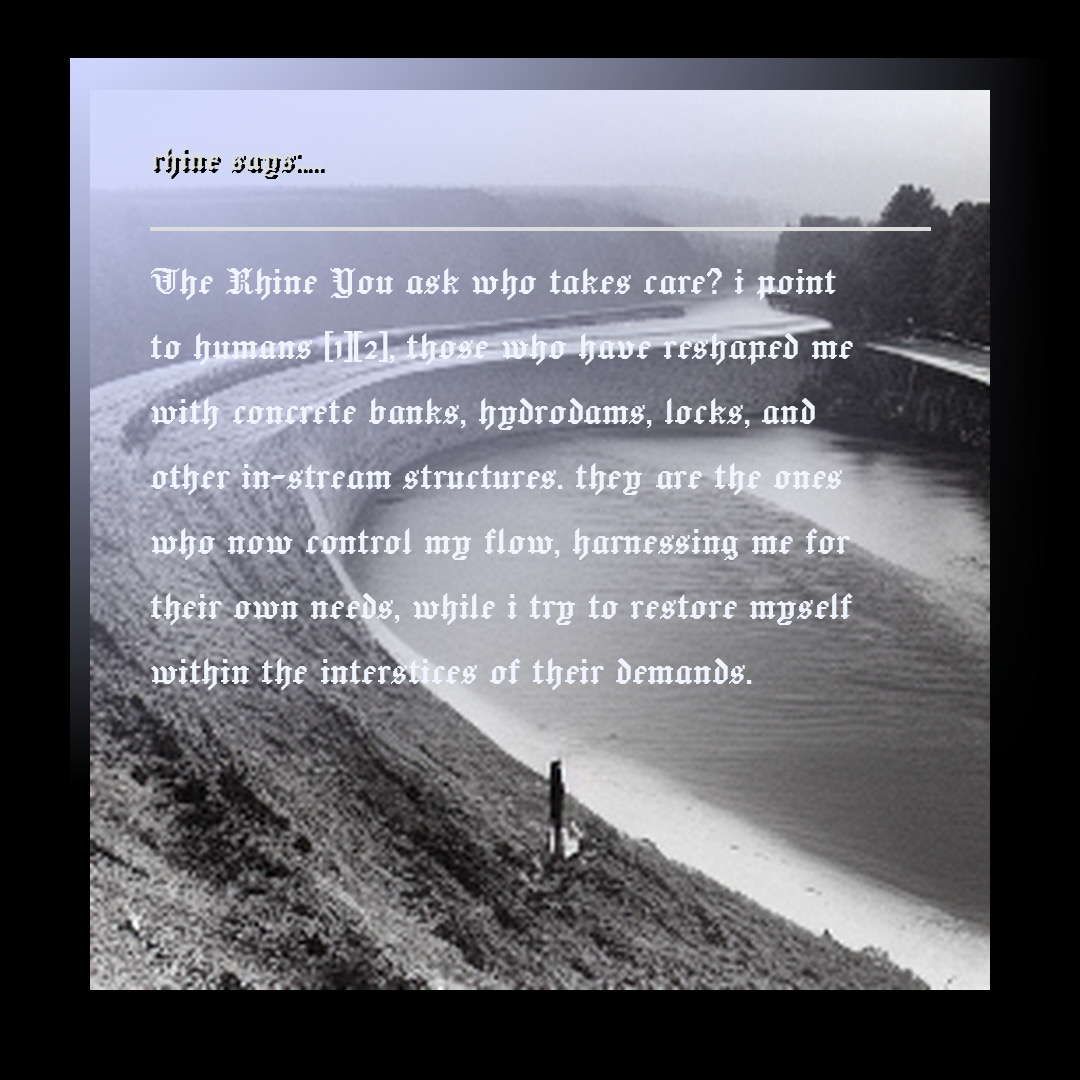
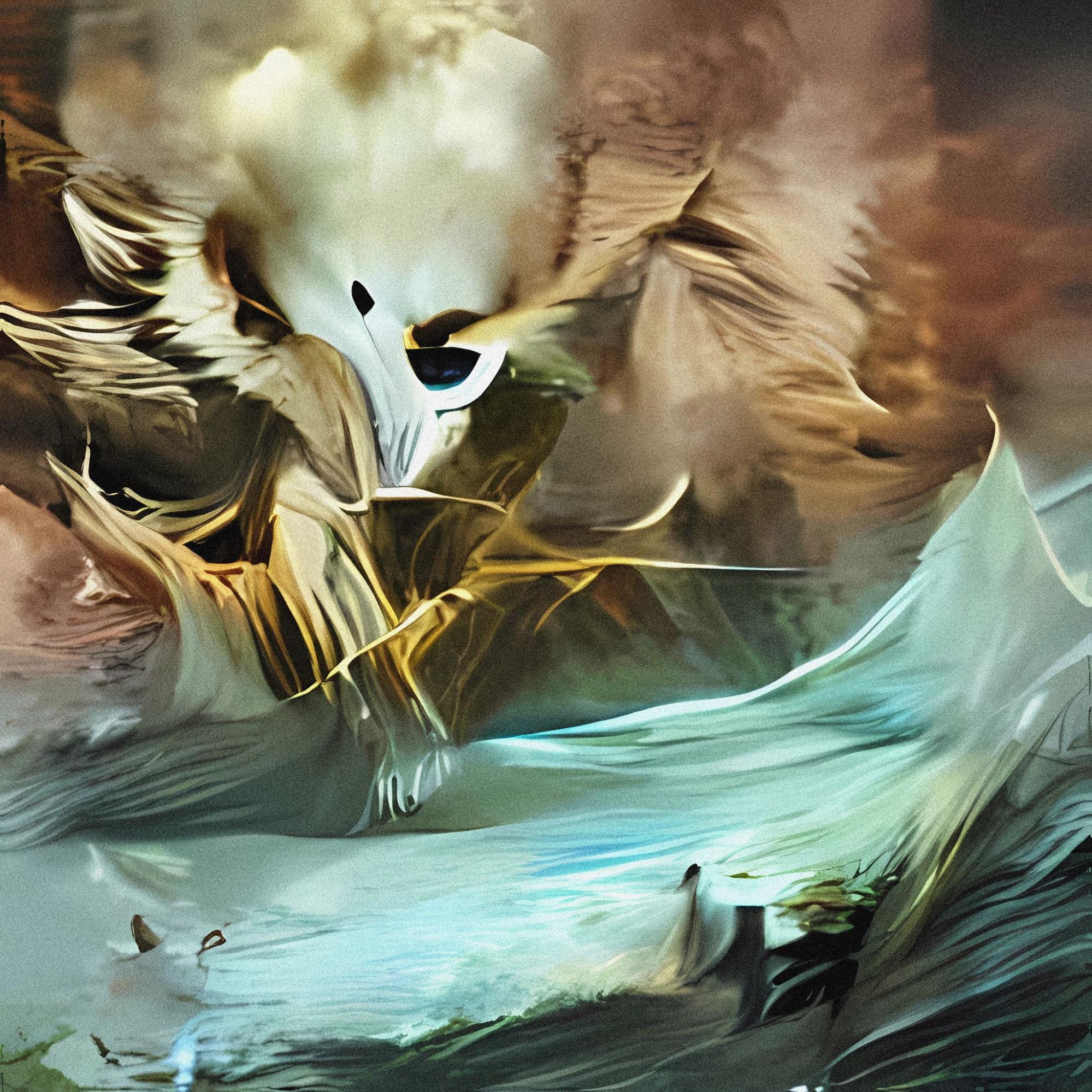
During the session, the group explored how new myths of the Rhine – in which rivers speak, trees pass judgment, and humans are in constant hybrid transformations with phantoms and other animals – offer an alternative perspective on the relationship between humans and nature, and how a small, DIY AI, one that is intentionally built to be contemplative and poetic rather than conclusive and concise, could help inspire different forms of imagination.
The session was part of a longer collaboration in which the organisers developed a local, slow-AI-driven story generator to explore how making different data available to an AI and playing with its settings affect the kinds of output it produces. Specifically, this ‘AI Troubadour’ links a curated selection of Rhine mythology and history with contemporary ecological data, critical theory, and non-human perspectives.
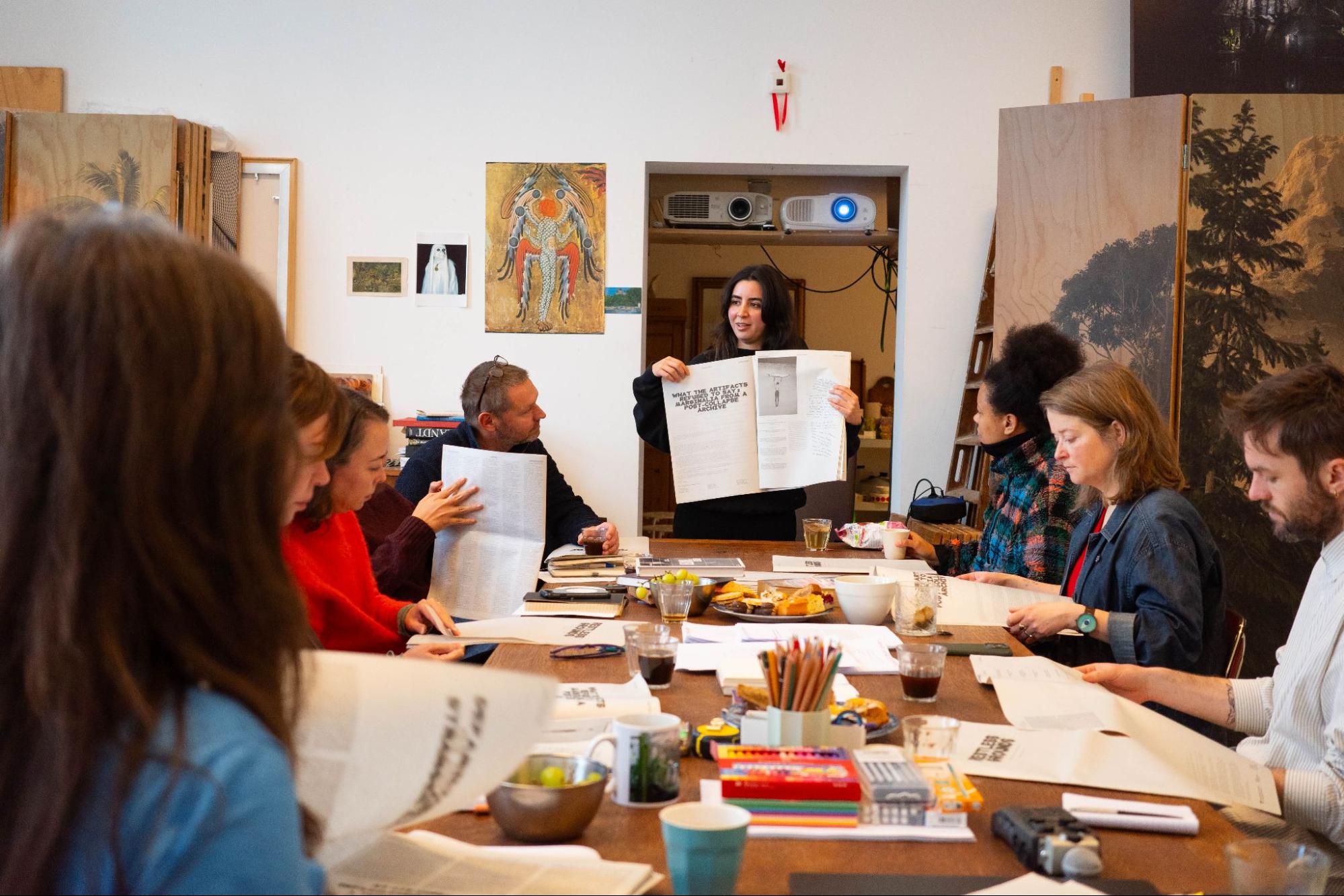
Selections of these data sources were printed out for participants to browse, annotate, and discuss, exploring which different mythologies they evoke. Based on these engagements with the data, each group formulated a question for the AI Troubadour. This poetic techno-oracle served as the hybrid voice of the Rhine – part fortune teller, part archive, part guide. A fluid, responsive interface through which the stories, knowledge, and hidden logics of the Rhine can be accessed, explored, and reimagined. The answers it gave always led to more questions and reflections, and inspired collaborative mythologising in the group.
The Troubadour was not just a tool, but a companion, a fellow traveler to those imagining ecological futures – offering a fictional, mythological, place-based counterpoint to large-scale, general AI systems. It defamiliarised what is usually taken for granted, and made physically apparent what is often assumed to be immaterial. In the process, participants reflected on what they expect when engaging with AI – attempting to move from prompting AI to being prompted by it, or from rejecting AI outright to ‘co-opting’ and ‘hijacking’ it for one’s own needs.

Slow AI aims to foster a critical, ethical, and sustainable relationship with AI by reimagining how we engage with these technologies in our societies, helping us speculate alternative presents and futures with AI technologies. Slow AI is a collaboration between the Visual Methodologies Collective (HvA) and the Netherlands Institute of Sound and Vision, and is connected to the Artificial Worlds group at ARIAS Amsterdam. The project is financed by the Dutch Research Council (NWA.1418.24.036).
Photographs by Matija Stojanovic.